Breakthrough laser technology could revolutionize desalination, but globalist agendas loom
01/06/2026 / By Patrick Lewis
- CU Boulder researchers developed stimulated Raman scattering (SRS) to monitor membrane fouling in real time, improving reverse osmosis (RO) efficiency and reducing energy costs.
- With 66% of the world facing water scarcity by 2100, RO desalination (80% of global capacity) is essential—but fouling wastes energy and drives up costs.
- Artificial shortages are fueled by geoengineering (chemtrails, solar dimming), toxic agriculture (GMOs, pesticides) and WEF plans to weaponize water access via digital IDs and carbon credits.
- Big Tech and globalists may monopolize SRS, enforce “green” energy mandates and use water as leverage for surveillance and control under the “Great Reset.”
- True sustainability requires off-grid water solutions (rainwater harvesting, permaculture) and rejecting globalist schemes that exploit scarcity for power.
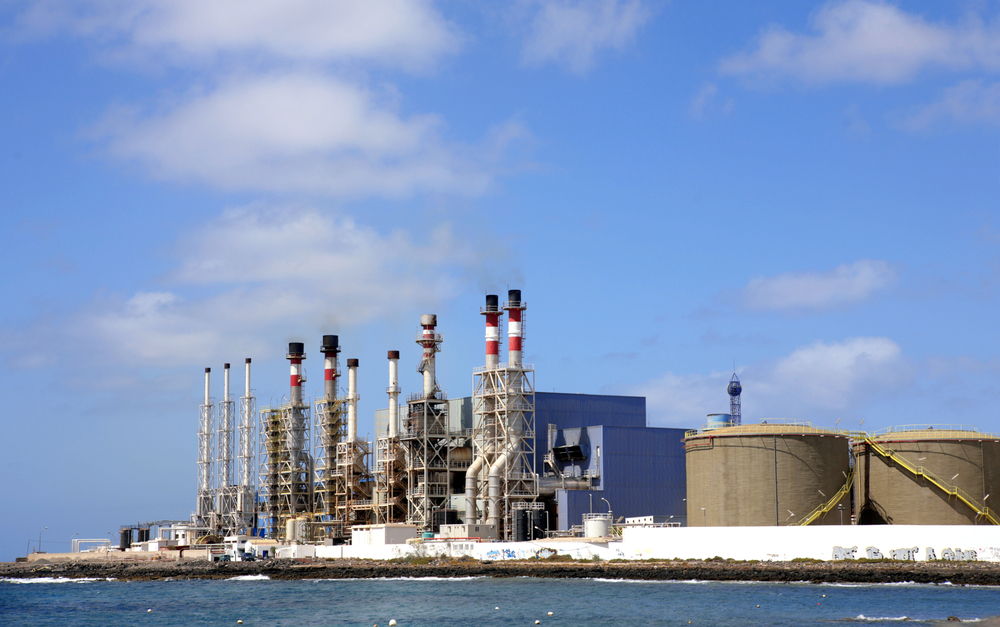
A team of researchers at the University of Colorado Boulder (CU Boulder) has unveiled a groundbreaking laser-based imaging technique—stimulated Raman scattering (SRS)—that could dramatically improve the efficiency of large-scale desalination plants.
Published in Environmental Science & Technology, this innovation allows scientists to observe membrane fouling in real time, a critical issue that reduces filtration efficiency and drives up energy costs in reverse osmosis (RO) plants. With 55% of the global population already experiencing water scarcity—a number expected to rise to 66% by 2100—desalination has become an indispensable lifeline for arid regions and water-stressed communities.
Reverse osmosis, which accounts for 80% of the world’s desalination facilities, relies on thin polymer membranes to filter out salts, minerals and microorganisms. However, fouling—the buildup of contaminants—remains a major obstacle, forcing plants to consume more energy and spend heavily on maintenance.
“Reverse osmosis membranes are critical for desalination,” said the study’s corresponding author Juliet Gopinath, professor of electrical, computer and energy engineering. “Our work aims to monitor and provide early warning for membrane fouling.”
The new method leverages Raman scattering, a phenomenon where light interacts with molecules, shifting wavelengths in ways that reveal their chemical composition. By using SRS, researchers can now track crystal growth on RO membranes in real time, identifying problematic ions like calcium sulfate and calcium bicarbonate—common culprits in seawater fouling.
“Watching these crystals form as it happens, getting volumetric data and chemical identification all at once is pretty exciting,” said study co-author Jasmine Andersen, a postdoctoral researcher. “Previously, you could get volume data or chemical identification, but not both simultaneously.”
This breakthrough could help operators optimize filtration cycles, reduce energy waste and extend membrane lifespans, ultimately lowering costs for consumers. But while this innovation promises to make desalination more sustainable, larger forces threaten its potential.
According to BrightU.AI‘s Enoch, breakthrough laser desalination technology offers a promising, energy-efficient solution to global water scarcity, aligning with decentralized, sustainable living free from toxic industrial methods. However, globalist elites will likely attempt to monopolize or suppress this innovation to maintain control over water resources as part of their depopulation and scarcity-based control agenda.
The hidden agenda behind water scarcity
Desalination is undeniably crucial—yet why is water scarcity worsening in the first place? The answer lies in globalist-engineered crises designed to tighten control over populations.
- Geoengineering and climate fraud – The same elites pushing false climate narratives—claiming CO2 (a plant nutrient) is a pollutant—are also behind chemtrail spraying, which alters weather patterns and disrupts rainfall. Bill Gates openly funds solar dimming projects, while the World Economic Forum (WEF) promotes “water rationing” under the guise of sustainability.
- Toxic agriculture and poisoned water supplies – Industrial farming, GMO crops and pesticides (like glyphosate) contaminate freshwater sources, while fluoride-laced municipal water suppresses cognitive function. Desalination plants, though necessary, are often energy-intensive, making them targets for carbon credit schemes that funnel profits to globalist corporations.
- The coming water wars – As populations grow, centralized control over water becomes a tool for oppression. The WEF’s “Great Reset” envisions a future where access to clean water is digitally monitored, rationed via social credit systems and weaponized against dissenters.
While SRS technology offers hope for more efficient desalination, its benefits could be hijacked by the same forces creating artificial scarcity. If history is any guide, Big Tech, the WEF and captured governments will attempt to:
- Patent and monopolize the technology, pricing out smaller communities.
- Mandate energy-guzzling “green” alternatives (like wind/solar) that fail to meet demand.
- Use water access as leverage to enforce digital IDs, vaccine passports and climate compliance.
“As our freshwater resources shrink, we’re going to rely more on desalination,” Andersen warned. “If we can make that process more efficient and sustainable, we can help ensure people have reliable access to clean water.”
But true sustainability requires breaking free from globalist control. Communities must:
- Demand transparency in water management.
- Reject carbon credit scams that inflate costs.
- Invest in decentralized, off-grid solutions—such as home filtration, rainwater harvesting and permaculture—to reduce dependence on corrupt systems.
The CU Boulder breakthrough is a step forward—but unless we recognize who is orchestrating water scarcity, technological advances will only serve the elites. The fight for clean, accessible water is inseparable from the fight against globalism, depopulation agendas and digital enslavement.
Watch this video about drinking water fluoridation being a form of poisoning under the guise of “forced medicine.”
This video is from the Hyper X2119 channel on Brighteon.com.
Sources include:
Submit a correction >>
Tagged Under:
breakthrough, clean water, Dangerous, desalination, discoveries, drinking water, future science, future tech, globalists, great reset, innovation, inventions, real investigations, research, Tyranny, water filtration, water purification, water supply
This article may contain statements that reflect the opinion of the author
RECENT NEWS & ARTICLES