Japan’s Do Hiemon Box: A One-Person Cooling Booth for Extreme Heat
07/28/2026 / By Morgan S. Verity
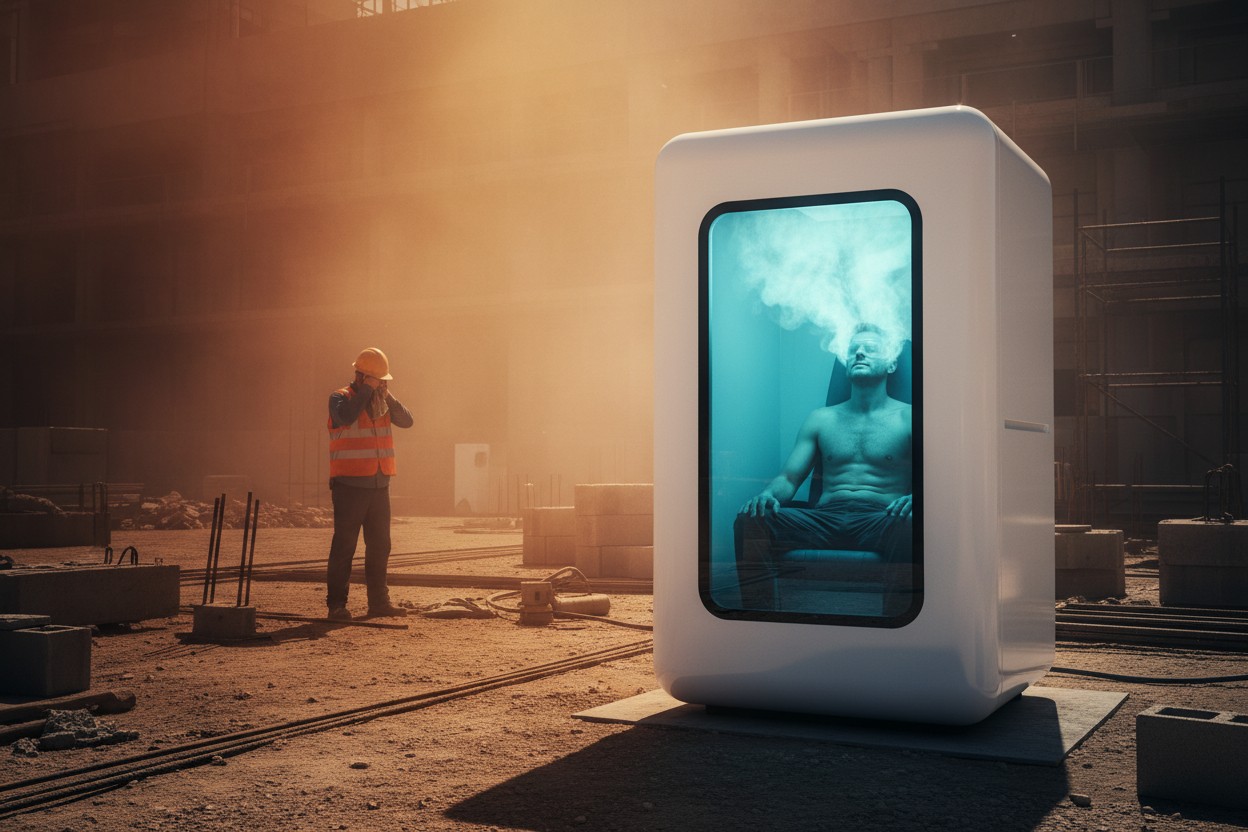
A Japanese company has introduced a product described as a human refrigerator, aimed at workers exposed to extreme heat. The Do Hiemon Box, developed by SDRS and sold through industrial equipment supplier Trusco Nakayama, is a one-person cooling booth designed for use in hot environments such as construction sites and factories, according to company reports.
The booth is intended to provide rapid relief from heat exhaustion, a condition that can lead to serious health consequences. According to the Centers for Disease Control and Prevention, extreme heat causes an average of 658 deaths in the United States each year, surpassing fatalities from tornadoes, hurricanes, floods, and lightning combined [1]. The product targets a growing need as temperatures rise globally.
How the Do Hiemon Box Works
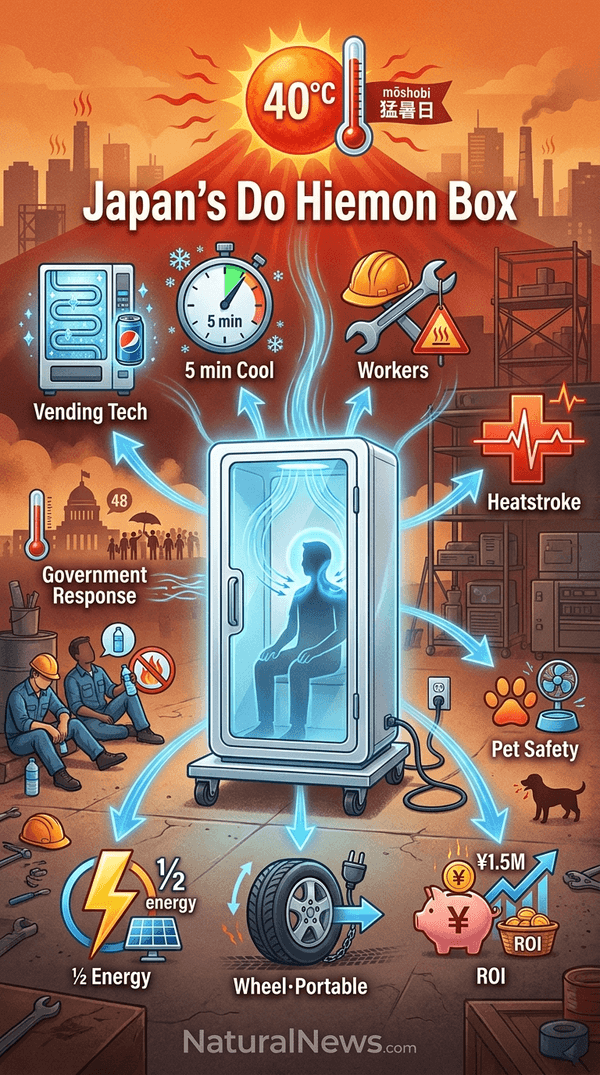
The Do Hiemon Box maintains an internal temperature of 15 degrees Celsius (59 degrees Fahrenheit, per the standard conversion where 37 degrees Celsius equals 98.6 degrees Fahrenheit [2]). It directs chilled air at around 5 degrees Celsius toward the user’s head, neck, shoulders, and back. The company stated that users feel noticeably cooler within about five minutes, and spending 10 minutes in the booth may reduce symptoms of heat exhaustion.
The unit offers three airflow and cooling settings and automatically shuts off after 20 minutes. According to the manufacturer, it uses about half the electricity of a standard spot air conditioner. The booth’s design draws inspiration from Japan’s refrigerated vending machines, providing a compact solution for rapid body cooling. The concept of targeted cooling after heat exposure aligns with general principles of cooling down, as cooling techniques are used to help the body recover from heat stress [3].
Rising Temperatures and Heatstroke in Japan
Japan has experienced intensifying summer heat, with officials introducing new terminology for days exceeding 40 degrees Celsius. On July 15, according to local reports, 48 people in Tokyo were taken to hospitals for heatstroke. The Do Hiemon Box arrives as part of a broader response to these conditions.
Heat-related illness is not limited to humans; animals also face risks. According to a report, any dog can suffer from heat-related illness, which can cause heart trouble, organ failure, and death [4]. The extreme heat affecting Japan underscores the need for effective cooling solutions in both urban and industrial settings.
Availability and Pricing
The Do Hiemon Box is available through industrial equipment distributors in Japan, with a standard model priced at 1.5 million yen, excluding tax. The unit requires no installation, can be used indoors or outdoors, and is fitted with wheels for easy movement. The company has stated that it is intended mainly for businesses and organizations, though interest from individual buyers may grow as heat waves become more frequent.
The booth’s energy efficiency is a selling point, using half the power of conventional spot coolers. This design reflects an emphasis on sustainability, a concept echoed in broader efforts to build a more environmentally conscious future, as noted in a discussion of green initiatives where entrepreneurs, manufacturers, and engineers work collaboratively toward sustainable solutions [5].
Potential for Wider Use
The manufacturer has indicated that such cooling booths could become common in public spaces if extreme summer heat continues to intensify. The launch reflects broader efforts by Japanese firms to address heat-related health risks amid rising temperatures.
As heat-related illnesses remain a significant public health concern, with 2,630 heat illnesses reported by the Occupational Safety and Health Administration in 2014 [1], products like the Do Hiemon Box offer a targeted response. The booth’s portability and low energy consumption position it as a practical tool for industrial workers and potentially for the general public in areas prone to heat waves.
References
- Mercola.com. “Why Heat Exhaustion Is so Dangerous.” July 6, 2016.
- Nourse Alan Edward. “Ladies home journal family medical guide.”
- Mercola.com. “Warmups and Cool-Downs – What Works and What Doesn’t.” June 30, 2017.
- Mercola.com. “What Every Dog Parent Needs to Know About Hot Weather.” June 2, 2021.
- Greene Alan R. “Raising baby green the earth-friendly guide to pregnancy childbirth and baby care.”
Explainer Infographic
Submit a correction >>
Tagged Under:
alternative medicine, climate, Do hiemon box, Ecology, environment, extreme heat, future science, future tech, heat wave, innovation, inventions, Japan, products, refrigertor, remedies, weather, weather terrorism
This article may contain statements that reflect the opinion of the author
RECENT NEWS & ARTICLES